

Take them down now! Decorating for Christmas when your child hates change
Parent of the year to complete monster in the twinkle of a lightbulb. This is parenting AuDHD children I guess.

“Take them down… Now!”
Not quite the reaction I was expecting after I completed my annual mission of “engrottofication.” I’d been happily working away for an afternoon, expecting wide eyes of wonder and thank yous. Instead, my son was reacting as though I’d just teepeed his bed.
I have always loved decorating for Christmas. The twinkle of a star cutting through the darkness, temporarily harnessed within your living room, genuinely brings me joy every day of the festive season. I have to fight my instincts to ever take them down and every year when I am forced to by social convention I wonder if it would be OK just to leave a few bits of sparkle around the place.
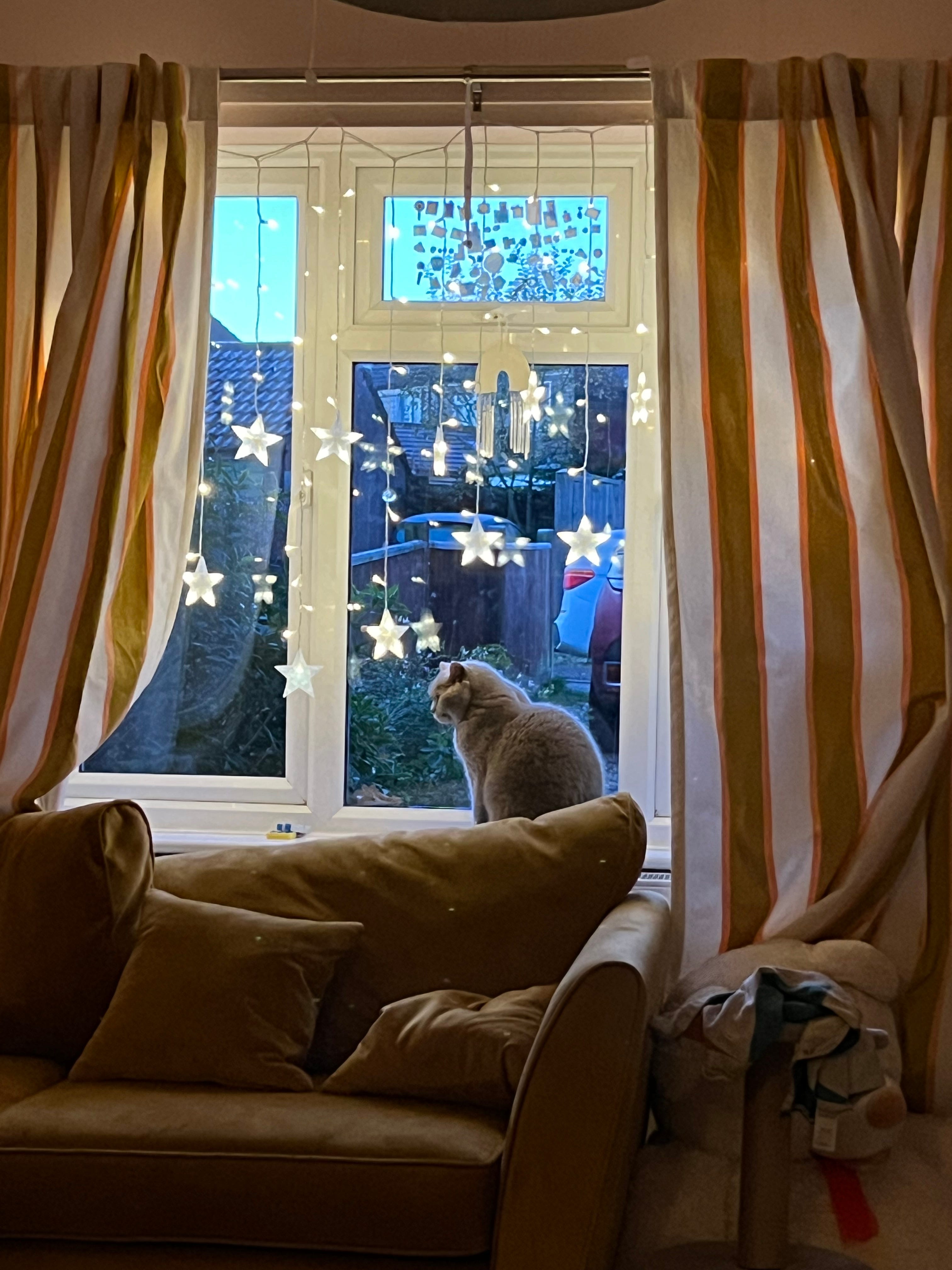
There was a “dark year” where my two older children began to really struggle with school and life but we didn’t yet have a good understanding of why. This was the Christmas of that year of darkness and I’d been craving my little strings of twinkling hope more than ever. I’d gone at my display (which due to budget was actually quite modest) with the gusto of an 80s Dad in a Hallmark movie. I’d set it all up so that when my son got home from his hour of school he would have his day lifted from the mundane to the marvellous.
But as we crunched up our drive I knew instantly I’d made a mistake. His body tensed for escape when he saw the flashing in the window and within seconds of key turning in lock he was face down on the sofa with a blanket over his head. The guilt bubbled predictably and the “shoulds” rushed up to meet me. “I should have known he wouldn’t like it.” “I should have realised it would be too much change.” “How can I have been so selfish?”
Parent of the year to complete monster in the twinkle of a lightbulb. That is parenting I guess.
Looking back I can fully appreciate how I made this mistake with the best of intentions. Many Autistic people really struggle with Christmas for a lot of reasons and in this series I’m going to explore some of them in more depth but at this point, just before our children were formally diagnosed, I wasn’t thinking about Autism. Decorating for Christmas had never been problematic for us before (or so I thought) and this was my son’s fifth and my daughter’s seventh Christmas so even though I knew that in general they didn’t like change I thought Christmas was exceptional. In my mind magic would turn anxiety into excitement like it always has for me.
Now my children are older and more able to articulate what they are going through I realise that they were never actually OK with my decorations and lights displays. They just showed it through lack of sleep and increases in anxiety and anger that I never traced back to my beautiful symbols of love and joy.
At first, as I unwound the tinsel from the bannister and fetched the ladder to unclip my lights from the ceiling, I thought this would mean I could never decorate for Christmas again. The grief of that idea sat heavy in the pit of my stomach and I tensed around it, knowing they wouldn’t be able to take tears from me (another unexpected thing) on such a fragile afternoon. If you are a parent to children who think differently you will know the grief I’m talking about. It feels like a weight dragging you down and below the world as you know it. If you crane your neck you can look up and see the images of your your imagined and longed for family Christmases. You can see your friends trimming trees and enjoying Christmas music with their kids. But you know you can’t get back there. I felt hollowed out.
By the next day I was resigned to the fact I couldn’t build my sparkly grotto at home and was thinking of different ways to get my festive fix. I was so engrossed in this thought that I almost didn’t notice the house next to school until my son broke away from the grip of my hand and ran at it full pelt. It shone like the star of Christmas itself, beautiful, gordy, 80s Dad, Hallmark movie giant penguins and Santa’s sleighs. This was the full grotto experience on the front lawn of an 80s mid-terrace. Exactly my dream and my kids were running towards it like moths to a flame.
How were they able to give this house the reaction I’d longed for when they’d found my attempts so upsetting?
In my series of the positives and pitfalls of diagnosis I pointed out the tendency we have to over simplify complex personalities once we have a label for them. This is a great example of that. It may be true that many Autistic people don’t like Christmas decorations but we have to investigate further to find out the unique reasons why they don’t like them. There could be a million reasons. Maybe lights appear too bright and hurt their eyes, maybe they can hear the electrics buzzing (even if I can’t), maybe the decorations have displaced a treasured item and home feels unsafe now. After seeing them revel in the sensory delight of the local “Christmas house,” enjoying the light skipping over their skin and making shapes with their fingers to try and trap it, I knew the lights themselves were not the problem for them. My theory became that the struggle had been about the erosion of their safe place. To test out my theory and with hopes that I might get some twinkling lights back on I decided to ask them to help me create our “Christmas house” inspired by the one we had just seen. I laid out the decorations we had available and gave them free rein to use as much or as little as they liked. Then they pointed and I hung. This time nothing was moved out of its usual place which meant I couldn’t have everything I had wanted. The glitter frosted the edges of our room rather than engulfing it grotto style. They also agreed that there should be no outside decorations apart from some stars that could hang in the window. It was important that home looked like home rather than a Christmas house because they didn’t live in a Christmas house.
I didn’t get the magical moment of surprise and awe I had been hoping for as my kids crossed the threshold but I got what I really wanted, a bit of magic cast over the mundane and they got what they needed. A home that felt safe with a little bit of magic infused.
Doing it this way was one of many parenting moments that have made me let go of something I held onto rigidly. My belief that decorations should all go up on the 1st of December and have one big “reveal” moment was out the window for a start. Since that experience we put our decorations up slowly and start earlier so they have time to acclimatise and can thoughtfully instruct me on where to put them. We also have far less than I would have imagined and it never looks how Ideal Homes suggests it should when I use my kids as mini interior designers. Letting go of my own expectations and digging deeper into my kids experience helped us find a way though that feels like Christmas magic for all of us.
Here are my tips if decorating for Christmas feels stressful for your family too:
Notice and acknowledge your feelings. It is OK to be sad if you are letting go of something you have always imagined would be joyful. It hurts.
Show yourself compassion. Take time to show yourself some Christmas warmth. It is not your fault that your kids aren’t brimming over with joy at this moment. You are doing your best and you are a great parent who is doing the work to understand them. No one can get it right first time, every time.
Recognise what you are giving up. Do you have rules in your head about Christmas that you are breaking here? Who gave you those rules? How much do they matter? If you are faced with a rule that is actually something you need then think creatively about how you can meet it without causing stress for the family.
To come up with creative solutions we need to know what is difficult for the kids. For mine it was the rapid transformation/engrottoficiation that was the problem and the sensory overload of too many decorations in a small space. Allowing them to design and put up decorations where they wanted them and paring back my grand plans to the modest minimum was the solution. It might be different for your kids, the might be having a season where no change at all can be tolerated or the sensory experience of lights, tinsel etc is horrific for them. If you can work out what exactly they don’t like/dysregulates them then you are in the best position to consider some lower stress options.
Possible lower stress options could (depending on what they struggle with) include visiting a Christmas lights trail instead of decorating at home, changing the decorations you use to ones that include scents, textures, colours and light levels that they enjoy, giving them autonomy of what decorations you use and where gets decorated. If you have a larger house you could have “normal” zones and “christmas zones” so they can choose how much festive spirit they want to indulge in. Our space is small but we have a sensory black out tent and don’t put any decorations upstairs to try and do this.
This article from the Special Kids Company might also be useful.
I hope this helps a little if you are faced with the challenge of meeting your own needs and those of neurodivergent children over the Christmas period. Above all else know that you are not alone, there are many of us out there feeling a little sad that Christmas literally looks different for us but I can reassure you that making the changes I am describing in this series of posts has brought much more harmony and joy to our family Christmas. I hope they might for you too.
Do you have a friend who is dreading Christmas? This is the first article in my series on surviving and maybe even having fun over Christmas with your Autistic and/or ADHD kids. Please share with any parents you think could use a little solidarity and permission to be kind to themselves over the festive season.